

Building close to the coast comes with its advantages of natural stunning views, and surreal surroundings. Although the proximity of building a home so close to a beach faces a different corrosion environment to one set on a sheltered inland block. The materials used in building coastal homes reflect that of its location requirements to ensure a durable, safe and comfortable lifestyle.
For homes on the Surf Coast, material selection needs to account for the combination of salt-laden air, strong winds, moisture and, in some locations, exposure to breaking surf. Rather than relying on a single “coastal” product, a durable home comes down to coordinating the structure, cladding, roofing, fixings and external hardware to suit the specific site conditions.
Commonly Used Coastal Building Materials
Depending on the location and exposure, commonly used materials can include:
- Reinforced concrete or appropriately specified concrete construction: Provides a strong, durable structural solution when the concrete mix, reinforcement and cover are specified for the site’s exposure conditions.
- Fibre-cement or timber-based cladding systems: Offers a practical balance of weather resistance, appearance and low maintenance when the product and installation details are suited to coastal conditions.
- COLORBOND® steel roofing: A durable roofing option that can perform well in coastal environments when the appropriate product, coating and installation requirements are selected for the site’s exposure.
- Corrosion-resistant fixings and hardware: Helps protect vulnerable connections, fasteners, hinges and other components from salt-laden air and moisture.
In higher-exposure coastal environments, stainless steel components may be specified, with 316-grade stainless steel often considered where greater resistance to salt and marine environments is required.
Different Coastal Building Environments
Not every coastal site requires the same specification. A home set back from the coast in Torquay may have very different exposure conditions from a property closer to the ocean or breaking surf in Anglesea, Aireys Inlet or Lorne. Material selection should therefore consider the site’s corrosion environment, wind exposure, orientation and the manufacturer’s installation requirements.
Coastal homes reward careful material selection and detailing well before construction begins. Choosing appropriate products, protecting vulnerable connections and using compatible fixings and hardware can help reduce corrosion, maintenance and premature deterioration over the life of the home.
If you’re planning a new build or renovation anywhere from Torquay through to Lorne, it’s worth discussing the site’s exposure conditions with a builder and relevant design professionals before finalising the material schedule. The right specification can help your home withstand the conditions of the Surf Coast while maintaining its appearance and performance for years to come.
Which Structural Materials Suit Coastal Sites?
For coastal sites, structural material selection needs to balance strength, durability and resistance to salt-laden air and moisture.
- Reinforced Concrete: The standout structural choice for coastal building, offering the strength and durability needed to resist wind loading and salt-laden air when detailed correctly. Off-form concrete extends this further, giving a home a raw, architectural finish while retaining the same corrosion resistance when the concrete cover over reinforcement meets the relevant durability class.
- Masonry: This type can also perform well, more suited to ground-floor and boundary walls exposed to wind-driven salt spray. It’s low-maintenance once built, though mortar joints and ties need corrosion-resistant specification in higher exposure zones.
- Timber Framing: Remains common across the Surf Coast, but pressure-treated wood is essential wherever framing sits close to the building envelope or in ground contact. Treatment level should match the exposure hazard class, not just general construction practice.
- Galvanised Steel: Is a dependable option for structural steel elements such as portal frames and lintels, though in more aggressive salt environments a heavier galvanising coating or a switch to stainless steel fixings at connections is worth discussing with your engineer.
Structural Overview:
- Sheltered sites (behind dunes, several streets back): Standard reinforced concrete footings and slabs, treated pine framing, standard galvanised steel connectors.
- Moderate exposure (within a few hundred metres of the coast): Off-form concrete for exposed elements, higher-grade pressure-treated timber, heavier galvanised or stainless fixings at critical junctions.
- High exposure (frontline coastal blocks, exposed headlands like Bells Beach): Full reinforced concrete structure where practical, masonry to ground floor, stainless steel structural fixings assessed against the site’s corrosion category.
The National Construction Code sorts coastal sites into corrosion environments, and the ABCB Housing Provisions rate a site ‘Very High’ where it sits between 100 metres and 200 metres inland from breaking surf, which changes what’s acceptable for structural fixings and finishes in that zone, as outlined in Table 7.2.2a of the ABCB Housing Provisions. A soil report and site-specific engineering assessment will confirm which category applies before construction begins.
Which Cladding Materials Handle Salt and Moisture?
Choosing cladding for a coastal home is about more than appearance. Salt-laden air, wind-driven rain, UV exposure and moisture can all affect a facade, so materials need to suit the site’s exposure and be correctly detailed and installed.
Fibre cement is a popular choice for coastal homes, offering a clean, versatile finish while resisting rot, swelling and shrinking. It suits both contemporary and traditional designs and can be a practical option for homes across Torquay and the Surf Coast.
Timber cladding remains popular where a natural, weathered appearance is desired. It can perform well when the species, coating and detailing are suited to coastal conditions, although it generally requires more maintenance than fibre cement.
Brick and masonry provide robust, low-maintenance options and can work particularly well on lower levels and exposed sections. Natural stone, including granite and slate, offers excellent durability and is often used for feature walls and architectural accents.
Metal cladding can create a strong contemporary aesthetic, but the coating, fixings and product specification need to be appropriate for marine exposure.
Cladding Comparison Overview
Material | Salt resistance | Maintenance | Typical use
|
|---|---|---|---|
Fibre cement | High | Low (repaint cycle) | Full facades, sheltered to exposed |
Natural stone (granite, slate) | Very high | Very low | Feature walls, plinths |
Treated timber | Moderate to high | Moderate (recoating) | Sheltered elevations, feature cladding |
Vinyl siding | Low to moderate | Low | Rarely used in this region |
*When correctly specified and detailed.
For homes around Torquay, Jan Juc, Anglesea, Aireys Inlet and Lorne, the best choice depends on the property’s individual exposure. Flashings, joints, ventilation, drainage and corrosion-resistant fixings are just as important as the cladding material itself.
Specifying Roofs, Windows and Fixings
Metal roofing in a coastal-rated COLORBOND® steel profile is the standard specification for Surf Coast homes, chosen for its proven corrosion resistance and long service life when the correct product and coating are matched to the site’s exposure category.
Roof design should account for wind uplift and salt accumulation, with adequate pitch and detailing to shed water and reduce ponding around penetrations. Steeper, simpler rooflines with fewer valleys tend to perform better in high-exposure locations.
Impact-resistant windows matter more on exposed frontline sites where wind-borne debris is a real risk during storms, and they pair with corrosion-resistant frame hardware to avoid premature failure.
Fixings are frequently the weak link. Bright-zinc or low-grade hardware can corrode and bleed rust within a few coastal winters, staining the structure and weakening connections, according to coastal and marine-grade fixings guidance. Marine-grade stainless steel, specifically 316-grade, is the benchmark for roof fasteners, balustrade fittings and structural connections in higher exposure categories, offering corrosion resistance that standard 304-grade stainless or galvanised steel can’t match in direct salt spray.
Fixings Quick Reference:
- Sheltered sites: galvanised steel generally acceptable for most fixings.
- Moderate to high exposure: 304 stainless steel for most external hardware.
- Very high exposure (within roughly 100 to 200 metres of breaking surf): 316 marine-grade stainless steel for structural and exposed fixings.
Every one of these decisions should be checked against the assessed corrosion category and Bushfire Attack Level for the specific site, since Surf Coast Shire planning overlays and the National Construction Code both influence what’s acceptable.
Choosing Materials best Suited for Surf Coast Victoria
A block in Bellbrae, set back from direct salt spray, may have different requirements from a frontline site at Bells Beach, where greater coastal exposure can require more durable materials, protective coatings and corrosion-resistant fixings.
Coastal materials also need to be considered as a complete system. High-performance cladding can still deteriorate if paired with unsuitable fixings, while a corrosion-resistant roof won’t prevent problems caused by poor drainage or water management. Successful coastal construction comes from specifying the structure, cladding, roofing and fixings together based on the site’s individual exposure.
This is where local experience can make a difference. Contact Spicer Building, based in Torquay and building across Jan Juc, Bellbrae, Anglesea, Aireys Inlet and Lorne, to discuss your custom home build. We’ll carefully work through exposure and planning considerations during the early design phase, alongside site-specific factors such as soil conditions, coastal exposure, bushfire requirements and applicable planning and building controls. This approach helps ensure your home is appropriately specified for its site while achieving the architectural finish you’re looking for.
FAQ's
What is the best material for a house near the beach in Victoria?
Reinforced or off-form concrete paired with fibre cement cladding and coastal-rated COLORBOND steel roofing performs reliably across most Victorian coastal sites. The exact specification should be confirmed against the site’s assessed corrosion category under the National Construction Code, since frontline blocks near breaking surf require more robust detailing than sheltered sites further inland.
Why do fixings matter as much as cladding or roofing in coastal builds?
Fixings are often the first point of failure because standard bright-zinc or low-grade hardware corrodes and bleeds rust within a few coastal winters. Marine-grade 316 stainless steel is the benchmark for structural and exposed fixings in higher exposure categories, and specifying it correctly protects the cladding and roofing it holds in place.
Is timber framing still viable for a coastal home on the Surf Coast?
Timber framing remains common and viable, provided pressure-treated wood is specified to match the site’s exposure hazard class. Framing near the building envelope or in ground contact needs a higher treatment level than framing in fully enclosed, well-ventilated areas.
How close to the coast changes which materials I need?
The National Construction Code and ABCB Housing Provisions rate corrosion environments by distance from breaking surf, with sites between 100 and 200 metres inland typically rated Very High. This rating determines whether standard galvanised fixings are acceptable or whether 316 marine-grade stainless steel is required.
What decking material needs the least maintenance in a coastal environment?
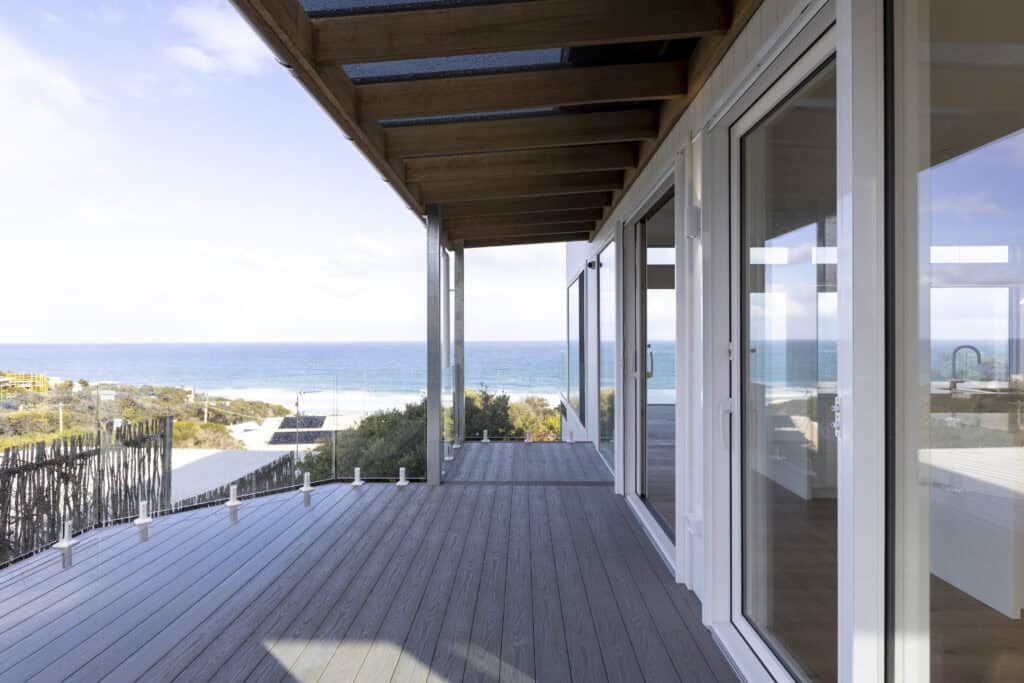
Composite decking needs the least ongoing maintenance, resisting rot, insects and salt damage without annual sealing or staining. Treated hardwood such as spotted gum offers a warmer natural look but requires periodic oiling to maintain its appearance and moisture resistance.
Do I need a corrosion assessment before choosing materials for my build?
A site-specific corrosion assessment, alongside a soil report and Bushfire Attack Level rating, should be completed before finalising material selections. These assessments determine which materials and fixing grades are actually required under the National Construction Code and applicable Victorian building regulations for your specific block.
Best Australian Coastal Building Materials
Builders in Torquay Victoria: Custom Homes and Builder Selection
Chat With us Today
We’d love to hear about your project. Whether you have detailed plans or just an idea, we’re here to help you take the next step.
